

Worn Tooth
Worn Tooth
Worn teeth can be sensitive and allow bacteria to enter the pulp causing an infection.

Originally published by Stephen Juriga, DVM · part of the AOSN network.
Signs you might notice
What you need to know
Hard objects like cow hooves, bones, nylon bones, antlers and even softer abrasive objects like tennis balls can result in loss of tooth structure.
What you need to know
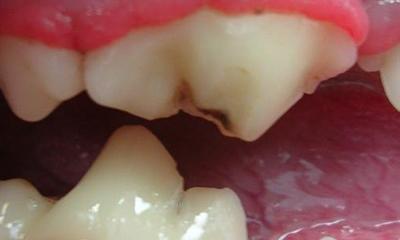
Dark brown spots may appear on worn teeth and overtime, bacteria will penetrate to the pulp and cause infection.
What's really going on
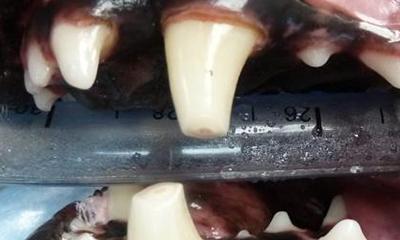
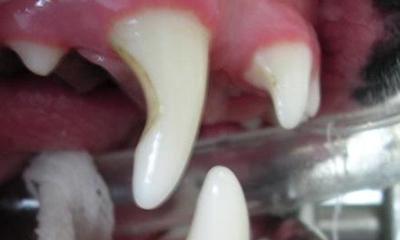
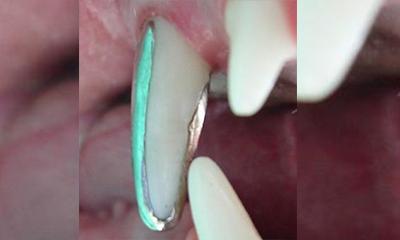
The abnormal process of teeth wearing rapidly is known as dental attrition or abrasion. Hard objects like cow hooves, bones, nylon bones, antlers and even softer abrasive objects like tennis balls can result in loss of tooth structure. Fortunately, the dental pulp can respond to gradual wear by laying down tertiary dentin, which is visible as a dark brown spot on the affected tooth. The dark brown spot is an irregular hard substance that is somewhat porous and in some cases allow bacteria to penetrate to the pulp.
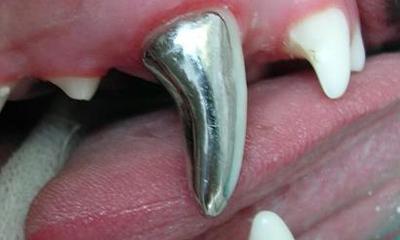
These teeth need an evaluation under anesthesia using a periodontal explorer and dental x-rays. Teeth found to be normal are recorded in the patient’s medical record and re-evaluated in 12 months. Affected or diseased teeth (root resorption, root infection) need to be treated with root canal or extraction therapy. Some pets benefit from metal crown therapy if the offending object (such as cage/crate/fence chewing, rocks) cannot be removed from their surroundings.
How it may look
How a specialist helps
Schedule an appointment to have your pet evaluated by clicking on the “Get In Touch with Us” button.
Possible therapy / treatment
Get help for your pet
Request a visit with our team and we'll take it from here.