

Malignant Oral Tumor
Malignant Oral Tumor
Malignant tumors are a mass of cells that have the potential to metastasize (spread) to distant organs such as the lymph nodes, lungs, and liver.

Originally published by Stephen Juriga, DVM · part of the AOSN network.
Signs you might notice
What you need to know
These tumors tend to invade adjacent tissues (bone) causing swelling and pain.
What you need to know
An early diagnosis (biopsy) allows for the best treatment options.
What you need to know
Surgical resection is the preferred treatment.
What's really going on
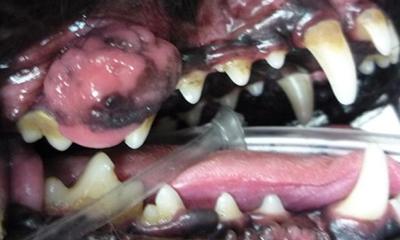
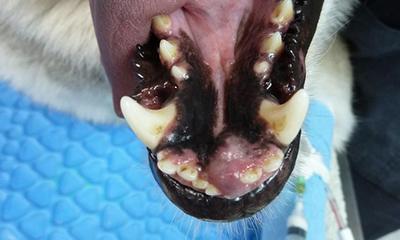
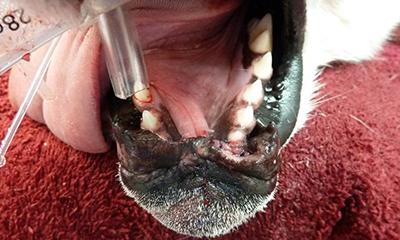
The tumor size, tumor type, review of the published research and the results of staging will direct the treatment strategy. For example, this squamous cell carcinoma of the gingiva offers a better prognosis than one of the tongue or tonsillar region or a fibrosarcoma requires larger surgical margins than other tumors. The pet owner is counseled on type of surgery, potential complications, post procedure appearance and return to function after treatment.
Schedule an appointment to have your pet evaluated by clicking on the “Get In Touch with Us” button.
How it may look
Possible therapy / treatment

Get help for your pet
Request a visit with our team and we'll take it from here.